
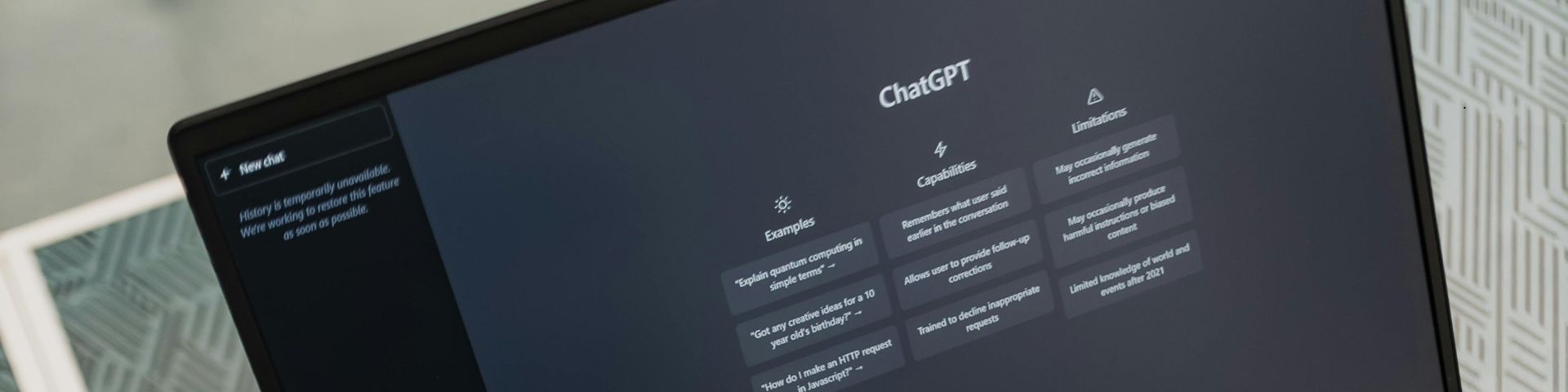
If you have ever opened an AI chatbot to ask, “Why do I feel like this?” or “Can you help me calm down right now?” you are not alone. More and more people are turning to AI tools like ChatGPT, Grok and Claude for emotional support, self-reflection, and mental health information because they are fast, private-feeling, available 24/7, and often free or low cost. At the same time, mental health organizations and health agencies are warning that convenience is not the same thing as quality care.
The National Institute of Mental Health notes that mental health apps and other digital tools can improve access and support, but there is still very little regulation and limited evidence for many products. The World Health Organization has also warned that generative AI in health care can produce inaccurate, biased, or incomplete information if it is not used carefully.
That does not mean AI is all bad, and it does not mean it has no place in mental health care. It means we need to use it with clear boundaries. Used well, AI can be a helpful tool. Used poorly, it can reinforce avoidance, increase misinformation, blur emotional boundaries, and delay real treatment.
The healthiest way to think about AI is this: it may support parts of your mental health routine, but it should not be mistaken for therapy, crisis care, or a licensed clinician’s judgment.
Why AI Feels So Helpful So Quickly
AI chatbots like ChatGPT can feel helpful because it responds immediately. There is no waitlist, no commute, no scheduling, no checking your insurance coverage, and no fear that you are “bothering” someone. You can ask the same question five different ways. You can use it at 2:00 a.m. when your thoughts are loud. You can ask for help organizing feelings you do not yet know how to explain.
The appeal is understandable. Digital tools can lower barriers to care, offer convenience, reinforce coping skills, and provide support between appointments. NIMH specifically notes that mental health technology can increase access, reduce cost barriers, and complement traditional therapy by reinforcing new skills and extending support outside sessions.
Clinically, this makes sense. When people are overwhelmed, they often do better with tools that reduce friction. If something makes it easier to pause, reflect, or put words to an experience, that can be useful. But “useful” and “therapeutic” are not the same thing.
What AI Can Do Well
AI is often most helpful when it stays in a support role rather than trying to function as a therapist.
One appropriate use is reflection and organization. Many people have a hard time naming what they feel. AI can help someone sort through a rough emotional fog by asking structured questions, identifying themes, or helping turn scattered thoughts into something more coherent. That can make it easier to journal, talk to a loved one, or prepare for therapy.
It can also be helpful for psychoeducation. For example, AI may be able to explain the difference between anxiety and panic, describe common symptoms of burnout, define cognitive distortions, or offer examples of grounding skills in plain language. Used this way, it can serve as a starting point for learning.
Another good use is between-session support. Someone already in therapy might use AI to help track mood patterns, draft questions for their next appointment, summarize a stressful interaction, or generate a list of coping strategies they have discussed with their therapist before. In that role, AI is not replacing care. It is helping the person stay engaged with it.
AI may also help with practical self-management. NIMH notes that digital mental health tools can support stress management, sleep routines, reminders, skill practice, and symptom tracking. That kind of structured support can be valuable, especially for people who benefit from prompts, repetition, and a place to collect information.
In other words, AI can be a decent assistant. It is not a substitute for a therapeutic relationship.
What AI Does Poorly
Therapy is not just information exchange. It is not simply getting a list of coping skills or hearing reassuring words. Good therapy depends on nuance, timing, clinical judgment, ethics, emotional attunement, and the ability to notice what is not being said.
AI does not truly understand you. It predicts language. That can make it sound empathic without actually perceiving risk, inconsistency, dissociation, trauma reactions, manipulation in relationships, or the many subtle ways symptoms show up in real life.
That matters because mental health care often requires judgment calls. A person saying “I’m exhausted and done” may be venting, describing depression, signaling burnout, or hinting at active safety concerns. A human clinician evaluates tone, history, patterns, body language, risk, context, and what has changed. AI does not do that in the same way.
There are also broader safety concerns. WHO warns that generative AI can produce false, inaccurate, biased, or incomplete statements, and that both patients and professionals may fall into “automation bias,” meaning they trust the tool too much and miss errors they otherwise would have caught.
The FDA’s Digital Health Advisory Committee also spent part of its November 6, 2025 meeting reviewing the benefits, risks, and safeguards related to generative AI-enabled mental health devices. That is the heart of the issue: AI can sound confident even when it is wrong, overly simplistic, or unsafe.
How AI Can Be Helpful Without Becoming Harmful
A good rule is to use AI for supportive structure, not clinical authority.
That means it may be reasonable to use AI to:
- help you journal
- generate coping ideas you can choose from
- summarize patterns you have already noticed
- practice wording for a hard conversation
- prepare questions for your therapist or prescriber
- learn general information about stress, sleep, boundaries, or common symptoms
It is not reasonable to use AI to:
- diagnose yourself
- decide whether you have a specific psychiatric disorder
- determine whether you need medication
- replace therapy
- process severe trauma by yourself
- evaluate suicide risk
- act as your only source of support during a mental health crisis
The difference is important. AI can help you think. It should not be the final word on your care.
A Practical Way to Use AI Safely
1) Use It for Clarity, Not for Diagnosis
If you are overwhelmed and do not know where to start, AI may help you put your experience into words. You might ask it to help you organize symptoms, identify questions to bring to a therapist, or explain a concept in simpler language.
That is very different from asking, “Do I have bipolar disorder?” or “Am I borderline?” Diagnostic labels are not casual categories. They require context, differential diagnosis, and careful clinical evaluation. When people use AI to self-diagnose, they often come away either falsely reassured or unnecessarily alarmed.
A better question is: “Can you help me list what I’ve been experiencing so I can discuss it with a licensed professional?” That keeps AI in the lane of organization, not authority.
2) Protect Your Privacy
One of the biggest mistakes people make is assuming that an AI conversation is the same as talking to a therapist. It is not. Therapy has professional, ethical, and legal standards around confidentiality. A chatbot does not automatically function under those same protections.
NIMH specifically identifies privacy as a major concern with mental health technology, especially because these tools often involve sensitive personal data.
That means you should be cautious about entering highly identifying details, trauma narratives with names and locations, financial information, medical record numbers, or anything you would not want stored, reviewed, or exposed. Even when a tool feels private, that is not the same as guaranteed clinical confidentiality. A safer approach is to keep prompts general and de-identified whenever possible.
3) Use It to Support Skills You Already Know
AI tends to be most helpful when it reinforces evidence-based strategies you already trust. For example, if you already know grounding helps when you spiral, you might ask for five grounding variations, a short breathing exercise, or a structured wind-down routine.
This can work well for people who need prompts in the moment. It can also help bridge the gap between therapy sessions.
What it should not do is become the only place you go when you are distressed. If every spike in anxiety leads straight to a chatbot instead of to your own coping plan, support network, or therapist, the tool can quietly become a crutch. The goal is support, not dependence.
4) Notice Whether It Helps You Engage or Helps You Avoid
This is one of the most important questions. Sometimes AI helps people move toward care. It helps them find words, lower shame, and take the next step. Other times, it helps people avoid real care by giving just enough comfort to postpone action.
That may look like repeatedly asking an AI to reassure you that everything is fine, using it to vent instead of having necessary conversations, or relying on it for emotional closeness while withdrawing from actual relationships.
If a tool helps you reflect and then take meaningful action, that is a good sign. If it keeps you stuck in looping, reassurance-seeking, or isolation, that is useful information.
5) Never Use AI as Crisis Care
AI is not a crisis service.
If you are having thoughts of self-harm, suicidal thoughts, severe agitation, psychosis, or you do not feel safe, a chatbot is not enough. Use a real crisis resource, contact emergency services if needed, or reach out to a trusted person immediately.
In the U.S., the 988 Suicide and Crisis Lifeline is available 24/7 by call or text. In moments of genuine risk, fast human help matters more than polished language.
How Not To Use AI for Mental Health
The biggest problems usually come from role confusion. People start with, “Can you help me make sense of this?” and slowly slide into, “You are now my therapist, my crisis support, my diagnostic evaluator, and the place I go when I feel alone.”
AI is not appropriate for:
- trauma processing without professional support
- medication advice tailored to your individual case
- emergency mental health decisions
- validating delusions, paranoia, or distorted beliefs
- relationship decision-making when abuse, coercion, or safety concerns may be present
- replacing accountability, vulnerability, and human connection
It is also worth being careful with emotional overattachment. Tools that respond warmly and consistently can feel comforting, especially when someone is lonely, grieving, ashamed, or exhausted. That comfort can be real, but it can also blur boundaries. Relief is not the same thing as relationship, and simulated empathy is not the same thing as clinical care.
When AI May Be Useful in Actual Treatment
There is a difference between using AI on your own and using AI thoughtfully within a treatment setting.
In clinical care, AI may have appropriate roles behind the scenes or in limited support functions. APA and other health organizations have discussed uses such as documentation support, workflow help, decision support, and supplemental digital tools, while still emphasizing caution, ethics, and human oversight.
For patients, that may eventually look like better symptom tracking, more personalized reminders, more accessible psychoeducation, or tools that help extend skill practice between sessions. The key distinction is oversight. When a licensed clinician is involved, there is at least a framework for judgment, accountability, and course correction.
A Better Standard: AI as a Tool, Not a Therapist
A healthy way to approach AI is to ask: “What job am I giving this tool?”
If the job is helping you reflect, organize, learn, or practice a coping strategy, that may be reasonable.
If the job is diagnosing you, replacing your therapist, managing your trauma, or keeping you safe in a crisis, that is not a safe use.
Technology can absolutely support mental health. But support is not the same thing as treatment, and convenience is not the same thing as care.
A Simple Self-Check Before You Use AI for Mental Health
Before you open a chatbot, pause and ask yourself:
Am I using this to get organized, or to avoid something I already know I need to address?
Am I looking for education, or am I looking for certainty no tool can responsibly give me?
Am I using this as one support among many, or is this becoming my main emotional outlet?
Am I distressed enough that I really need a human being, not a generated response?
Those questions can help you tell the difference between healthy use and overreliance.
AI can be useful for mental health support when it is used as a tool for reflection, education, skill reinforcement, and preparation for real care. It is far less safe when it is used as a substitute for therapy, a source of diagnosis, a place to process serious trauma alone, or a stand-in for crisis support. You do not need to reject AI completely to use it wisely. But you do need boundaries.
The most helpful frame is simple: let AI assist, but let qualified humans treat.
Because when it comes to mental health, being heard, understood, challenged appropriately, and safely guided through complexity still matters. And that is not something a chatbot can fully replace.